
In September 1730, a party sent by Maharaja Abhai Singh of Marwar came to a Bishnoi village near Jodhpur to fell its khejri trees for a royal building project. Accounts differ on whether the wood was wanted for a new palace or for lime kilns. What followed is one of the earliest recorded instances anywhere of people dying, deliberately and in sequence, to stop trees being cut.
What happened
A woman of the village, Amrita Devi, stood in the party’s way. Cutting a living tree ran against the twenty-nine principles her community lived by, and she refused to let it proceed. The soldiers offered a bribe to make her stand aside; she treated the offer itself as the insult. She was killed where she stood. Three of her daughters, who had watched it happen, took hold of the trees in turn and were killed after her.
Word travelled to the Bishnoi villages nearby. People came — and this is the part of the account that matters most. Everyone who died after Amrita Devi arrived knowing exactly what had already happened there. There was time at every step to turn back.
A council decided that each volunteer would take one tree. The elders went first, deliberately, before the young. By the time the Maharaja himself rode out to stop it, 363 Bishnois were dead.
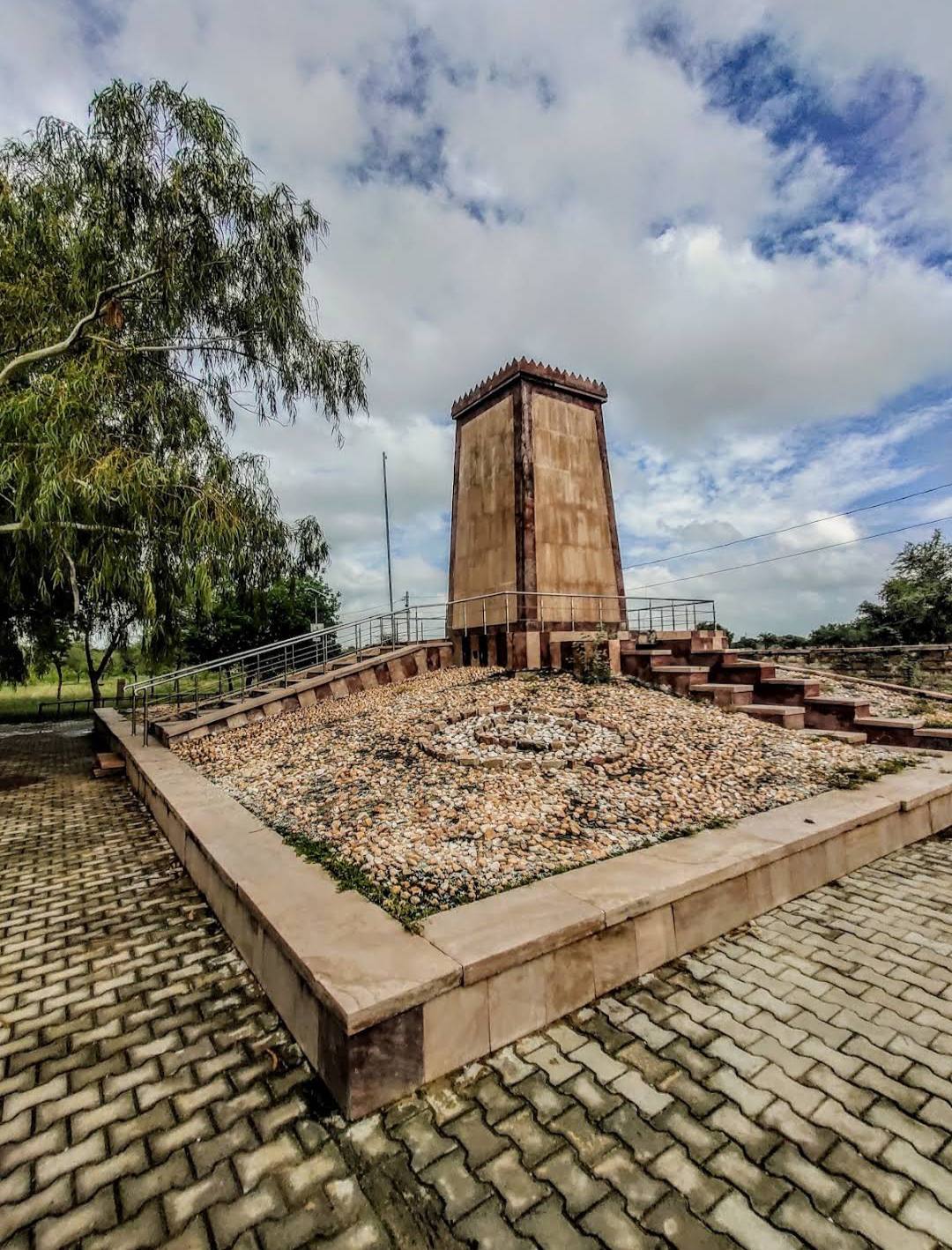
What happened afterwards
Abhai Singh recalled his men and is said to have travelled to the village to apologise, and to have decreed that the village would never again be compelled to supply wood to the kingdom.
Later tradition remembers that protection as far broader — a general ban on felling trees and hunting animals across Bishnoi land. The narrower version is what the available record supports; the wider one is community memory, and should be read as such until a copper-plate decree or a Marwar state record turns up to settle it.See research/claims-register.md, item 1
The village itself is said to have been known as Jehnad before the event, and as Khejarli — after the khejri trees — ever since.
Why it matters
The figure of 363 is the least interesting thing about Khejarli. What the day demonstrated is that the twenty-nine niyamas were not advisory. They determined what a person would defend, what a community would spend itself on, and where the line fell between human life and the rest of the living world.
That is the historical significance, and it is a larger claim than the one usually made for the event. Calling the Bishnois the world’s first eco-warriors flatters the story and obscures it: this was not an early environmental protest but a religious community acting on a rule it already held, two centuries before anyone thought to call such a thing environmentalism.
What it left behind
Environmental historians widely cite Khejarli as a forerunner of the twentieth-century Chipko movement, which used the same method — embracing trees to stop them being felled — more than two hundred years later, and which reshaped Indian environmental policy.
In 2013 the Department of Environment and Forests declared 11 September National Forest Martyrs Day, observed across India in memory of Khejarli and of those who have since died protecting forests and wildlife. The Government of India’s Amrita Devi Bishnoi National Award, for courage and work in wildlife protection, carries the name of the woman who refused first.
A commemoration is held at Khejarli each September, at the site of the graves.
Sources
This page describes the history of the Bishnoi community, which is far larger than, and mostly unconnected to, the businesses that carry the Bishnoi name. Nothing here is a claim on that heritage.