
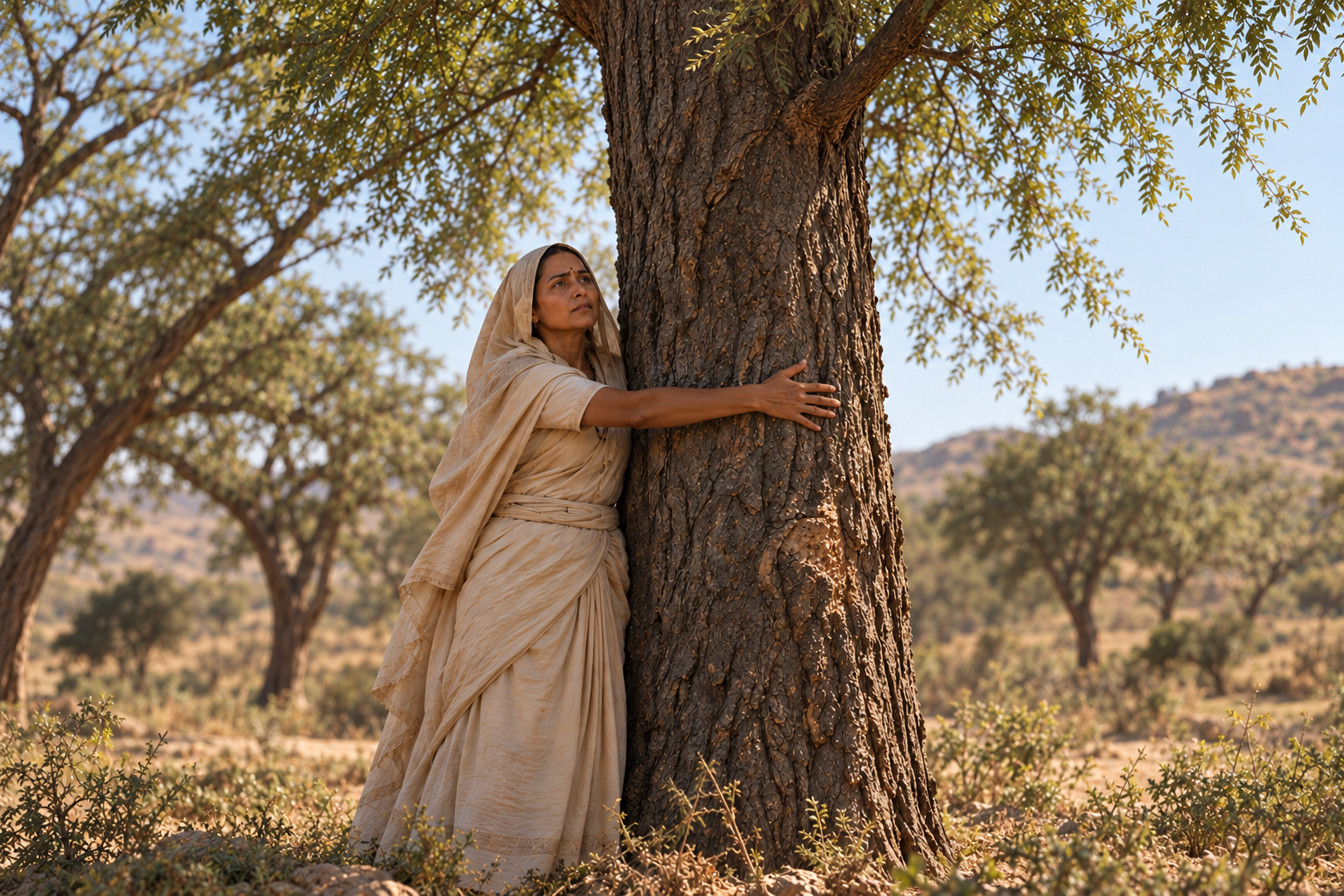
Amrita Devi lived in a Bishnoi village near Jodhpur, in the kingdom of Marwar. In September 1730 a party sent by Maharaja Abhai Singh arrived to fell the village’s khejri trees for a royal building project. She stood in their way, was offered a bribe to stand aside, and refused — treating the offer as the insult. She was killed where she stood, the first of 363.
Her daughters
Three of her daughters, having watched her die, took hold of the trees in turn and were killed after her. Community tradition names them Asu, Ratni and Bhagu. Those names are repeated consistently across community sources; the encyclopedic record refers only to “three of her daughters” without naming them, so we give them as tradition rather than as documented fact.
The saying attributed to her — that a head given for a tree is a fair exchange — appears in several renderings and is almost certainly later tradition too. It is no less true to what she did for that.
Why she is remembered rather than the 362
Not because she died first, but because of what her death made possible. Everyone who came afterwards travelled to the village knowing what had happened to her, and stayed anyway. Her refusal turned a raid into a decision that a whole community then had to take, one person at a time, with the outcome already visible.
That is also what makes her the moment the twenty-nine principles stopped being instructions and became something a person could be killed for holding.
The award that carries her name
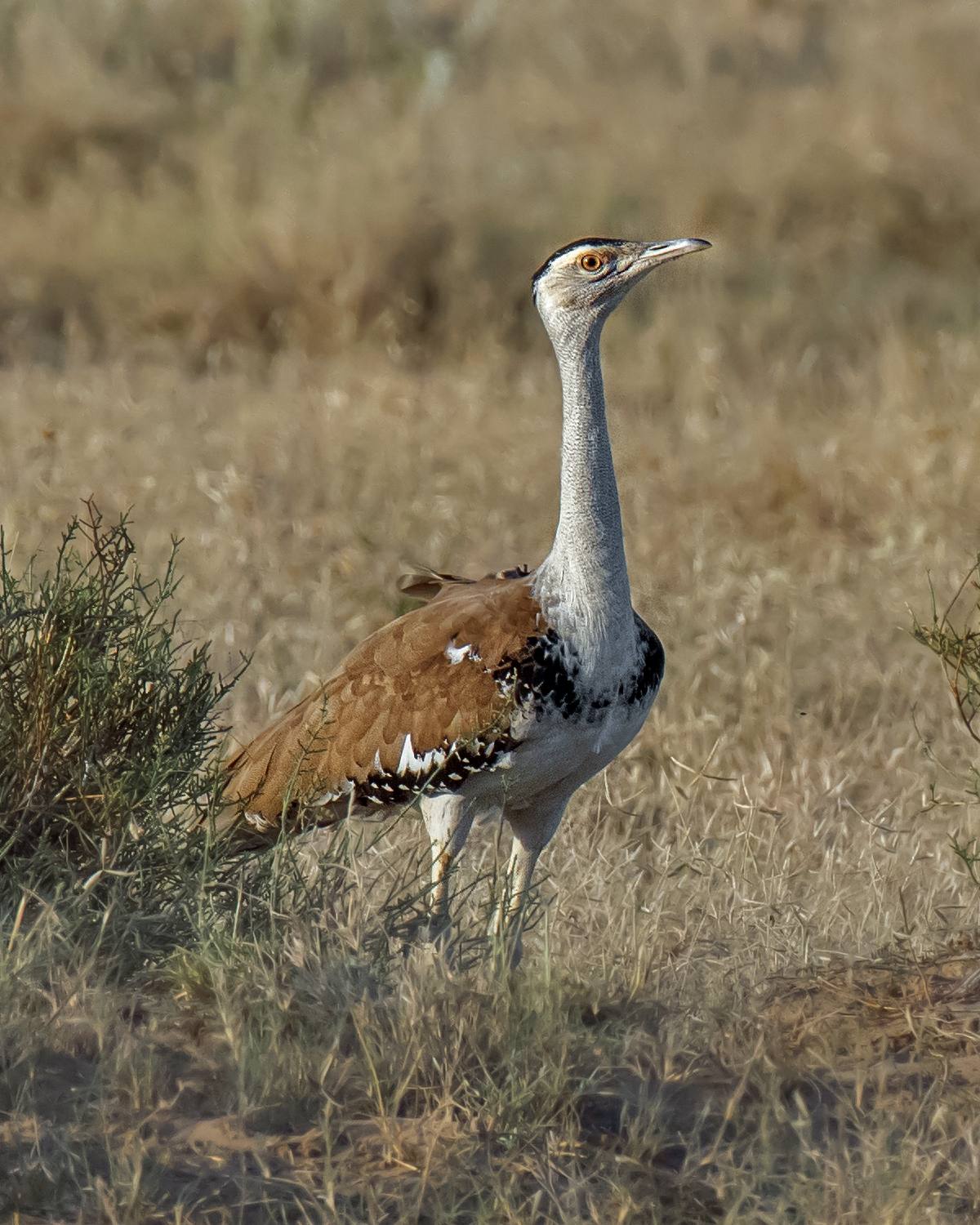
The Government of India’s Amrita Devi Bishnoi National Award recognises individuals and rural community organisations that have shown exemplary courage or done exceptional work in wildlife protection.
This is the single clearest piece of evidence that the events of 1730 left a mark outside the community that remembers them. A woman killed defending trees in the eighteenth century now has her name on the instrument by which the modern Indian state recognises the same act. It is not community memory; it is a government instrument, and it is citable as such.
Since 2013, 11 September has been observed across India as National Forest Martyrs Day, in memory of Khejarli.
A note on the shape of this history
Told carelessly, Bishnoi history becomes a sequence of male religious authority with one woman inserted at the dramatic moment. The record does not support that shape. Women carried the practice domestically, agriculturally and in transmission across generations — the daily work of keeping a tradition alive between its famous days.
Amrita Devi is also the standard by which anyone else belongs in this story: not because of a shared surname, but because their actions demonstrate the principles. That test is worth applying strictly.
Sources
This page describes the history of the Bishnoi community, which is far larger than, and mostly unconnected to, the businesses that carry the Bishnoi name. Nothing here is a claim on that heritage.