
Guru Jambheshwar — known also as Jambhoji — was born in 1451 at Peepasar in Nagaur district, and died in 1536. In 1485, at Samrathal Dhora, he set out the twenty-nine principles that would define the Bishnoi tradition, and he preached for fifty-one years afterwards. His final rites were performed at Mukam, in Nokha, Bikaner district, which remains the community’s principal pilgrimage site.
He is not the founder of a philosophy. He is the person a way of life formed around.
The distinction is worth insisting on, because the shorter version misleads. Jambheshwar did not hand down a doctrine that a community then adopted; the community, its practices, its clans and its identity took shape over generations around what he taught. The line runs:
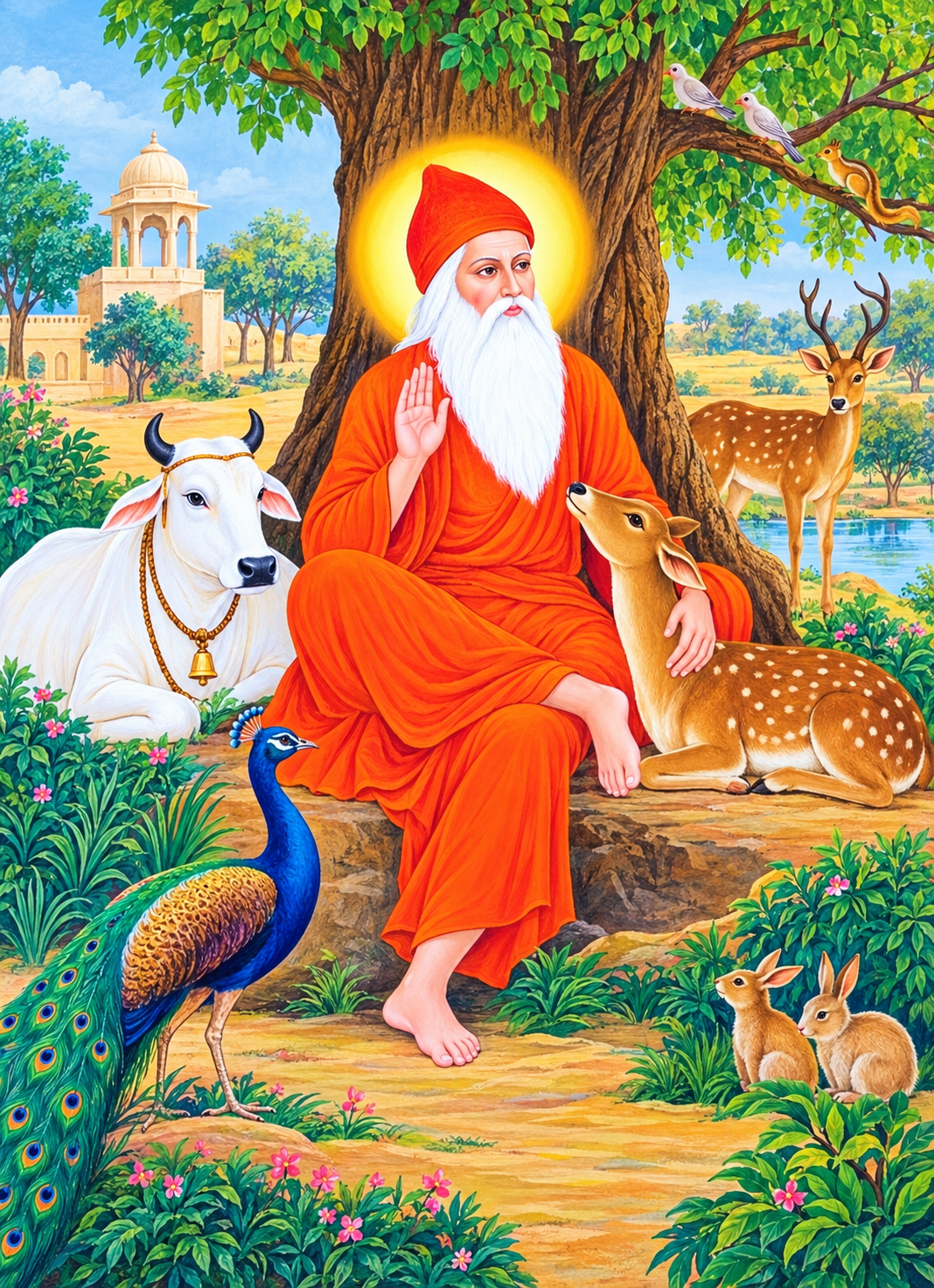
Guru Jambheshwar → teachings → community → generations → a living tradition.
Everything downstream of that — the villages, the gotras, the festivals, Khejarli — belongs to the Bishnois, not to him alone.
The drought
Tradition places his teaching against a severe drought in the fifteenth-century Thar. The detail matters, because it explains the shape the twenty-nine principles took.
The response to scarcity was not conquest, not migration, and not petition to a ruler. It was a code of conduct about restraint: what a household may cut, what it may kill, what it may drink, what it may wear, and how it must treat an animal that is no longer useful to it. A drought answered with rules about self-limitation is an unusual answer, and it is why the resulting tradition looks so different from a set of religious observances with an ecological appendix.
The drought framing is traditional account rather than documented climatology. Nothing about it is diminished by saying so.
The Shabadwani
His teachings survive as the Shabadwani, 120 shabads written in Nagri script, which contain the twenty-nine niyamas along with the rest of his instruction. The tradition sits within the broader Vaishnava current of Hinduism — Vishnu worshipped as Narayana and Hari, alongside Lakshmi — and among India’s Sant devotional traditions. That devotional core is also why the community’s name is sometimes written Vishnoi.
Beyond the niyamas themselves, very little of the Shabadwani’s content is described in accessible sources. 120 shabads is a substantial body of teaching, and most of it is not part of the story usually told.
The places
- Peepasar — his birthplace, in Nagaur district. Janmashtami is observed there.
- Samrathal Dhora — where the panth was established in 1485.
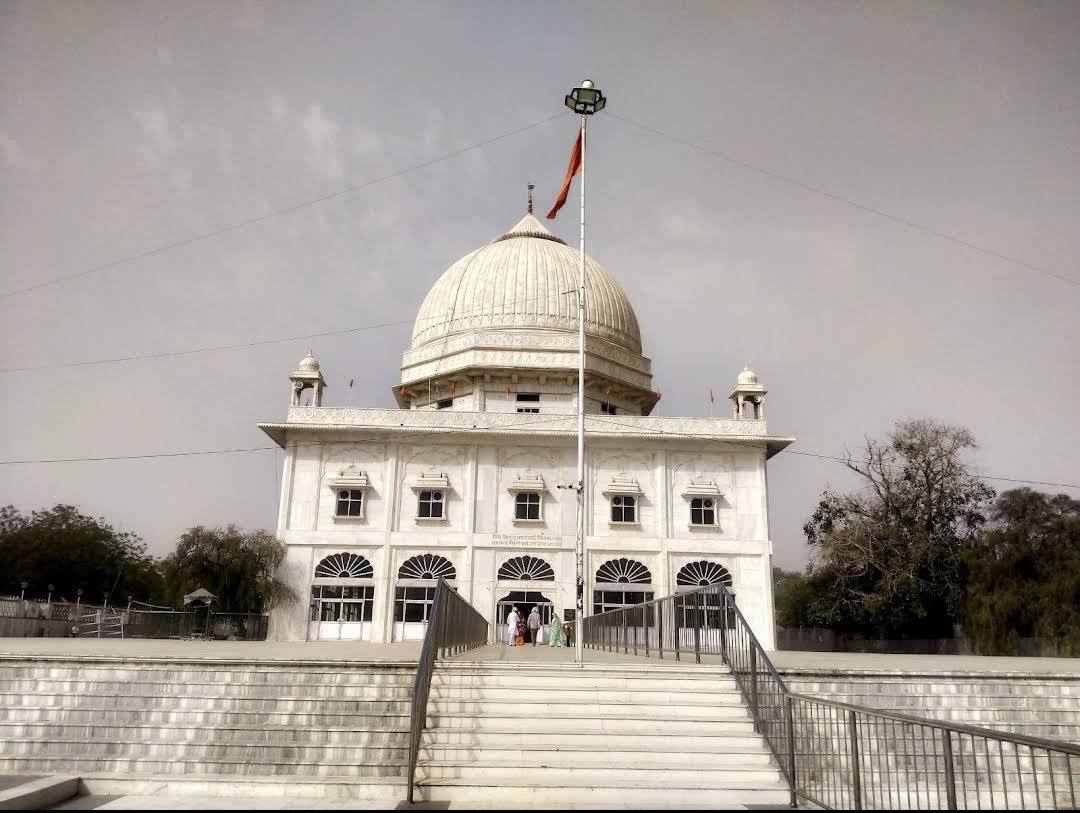
- Mukam — his final resting place, and the site of the Bhadrapad Amavasya fair, the community’s largest annual gathering.
- Jambholav — site of the Chaitra Amavasya fair.
His name today
Guru Jambheshwar University of Science and Technology was established at Hisar, Haryana, in 1995, named in tribute. The university describes him as “a saint environmentalist of the 15th century” — a description worth noting precisely because it comes from an institution rather than from the community.
This page describes the history of the Bishnoi community, which is far larger than, and mostly unconnected to, the businesses that carry the Bishnoi name. Nothing here is a claim on that heritage.